10 Things To Know About Chilled Water Coils

Chilled Water Coil

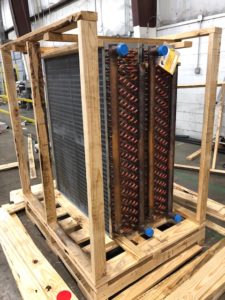
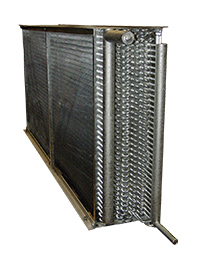
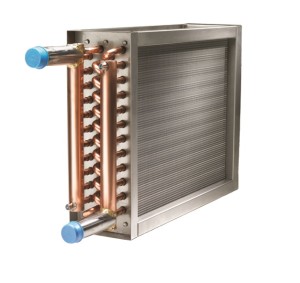
1. Hot or chilled water coils are still water coils. There is really no difference between hot water coils and a chilled water coils in construction. Hot water coils are usually 1 or 2 rows and chilled water coils are usually 3 to 12 rows deep.

2. The vast majority of chilled water coils are constructed from either 1/2″ OD tubes or 5/8″ OD tubes. A lot of that depends on the tooling of the original equipment manufacturer and what is more economical. Either size can be used and substituted for each other, which makes replacing your coil that much easier.

3. 1/2″ Tubes are on 1.25″ center to center distance. 5/8″ tubes are on 1.5″ center to center distance. For example, if a chilled water coil has a 30″ fin height, there will be (24) 1/2″ tubes per row or (20) 5/8″ tubes per row. The tube area of the coil is remarkably the same. They are almost interchangeable.

4. The quality of the coil often times is directly tied to the tube thickness. Many installations have water not treated properly or tube velocities that are too high. There are few perfect installations in real life. Increasing the tube wall thickness on a chilled water coil is a great way to ensure longer life.

5. Fins make great filters! Of course, they are not designed to be filters, but it happens. You can make any coil cheaper by making them 14 fins/inch with less rows rather than 8 or 10 fins/inch. Just remember that deep coils are very difficult to clean. Cheap is not the way to go most of the time!

6. Fins are designed for maximum heat transfer. They are much more complicated in design than they appear to be when looking at the chilled water coil. They are rippled on the edge to break up the air. They are corrugated throughout the depth of the fin. The tubes are staggered from row to row and the fin collars are extended. All of this to maximize heat transfer. Unfortunately, the byproduct of this is the fins can end up being great filters. Be careful in the design of any chilled water coil.

7. Fins are aluminum for a reason! They give you great heat transfer at an economical cost. You need a compelling reason to switch to copper fins as copper is very expensive, and you’re likely to double (or maybe triple) the cost of the coil. Coatings are popular for this very reason.

8. Many chilled water coils are built with 304 stainless steel casings. The casings are stronger, they last longer, they are stackable, and it’s fairly inexpensive. After all, what is the point of building the best coil possible and have the casing disintegrate over time around the coil? Sometimes, it’s money well spent!

9. Circuiting the coil is the tricky part of any coil. Circuiting is nothing more than the number of tubes that you want to feed from a header. There are two rules. You must keep the water velocity over 1 foot/second and below 6 feet/second. 3-4 feet/second is optimum. The second is the number of tubes that you feed must divide evenly into the number of tubes in the coil.

10. Replacing  your chilled water coil is easy. Rarely do you have to worry about the performance. When you replace a 20 year old coil, it is dirty and the fin/tube bond is not good. The coil is probably operating at 1/2 of its capacity at best. When you put a new coil on the job, your performance will automatically be terrific. Your main concern is now making the sure the coil physically fits in the space allowed. And always have this in the back of your mind: Smaller is always better than too large. Smaller you can always work with, whereas too large makes for a very ugly and expensive coffee table.

There you have it – everything you need to know about chilled water coils. Interested in learning more, please reach out to Capital Coil & Air! We look forward to the opportunity to be your coil replacement specialists!

RELATED POSTS

DX & Chilled Water Cabinet Coils
Coils and Counter-flow: 5 Common Questions

Top 5 Reasons HVAC Coils Prematurely Fail


How to make your HVAC OEM Replacement Coil Buying Process Easier??

Roughly 100% of HVAC OEM replacement coil shipments use some kind of trucking company or common carrier. There are occasions when the shipment is small enough to use UPS or FedEx, but the vast majority of HVAC shipments are sent by way of truck. Anyone who has frequently used freight companies has experienced damaged shipments and/or late arrivals. In our industry, these annoyances and inconveniences are typically written off as “the cost of doing business”. Think of the airline industry as an example. Our expectations have been reduced to point where we expect something to go wrong and are pleasantly surprised when the trip is smooth from start to finish.

Many folks might not know this, but even before the pandemic struck, the trucking industry in general had been experiencing a gross shortage of drivers throughout the country. Some estimates have put this shortage of drivers as high as 50,000 throughout the country.

So what does this shortage mean for the HVAC industry? Put simply, it translates into complications and confusion for all involved.

  • Longer delivery times. For example, a delivery that used to take (3) days is now (5-7).
  • One major reason for the longer delivery times is that trucks now have many more stops than in years past. There are also many instances of more trips through connecting terminals as well.
  • More time on the truck usually equates to both “visible” and “hidden” freight damage.
  • The shipments become harder to track, and with fewer people at the trucking companies doing more work, shipments can and will get lost entirely.

Because the freight process is at the very end of the OEM replacement coil buying cycle, Capital Coil & Air has developed some simple strategies for the entire buying process that should help in avoiding many of the annoyances listed above. We’ve also added a very useful “hint” to counter longer freight delivery times.

  • Getting a price, delivery & accurate proposal from your vendor: Capital Coil responds to every quote request quicker than any of our competitors, and we are always willing to put that claim to the test. A (2) day delay in receiving your quote is the same as a (2) day freight delay on the back end.
  • Receiving your submittal drawings in a timely fashion: You need to approve these drawings, so once again, how is a (2) day delay in receiving approval drawings any different than receiving your order (2) days late?
  • Quick-Ships: As you’ve probably experienced numerous times in the past and/or present, other coil manufacturers seem to be consistently shutting down their quick-ship programs with little to zero notice for the customer. Why is this? Many manufacturers take on a glut of OEM replacement coil business, or other large projects with small profit margins. In many cases they do this simply to keep the factory running during the slower periods of the year. This has the effect of delaying standard lead times, and in many cases, cancelling quick-ships altogether. It is very hard to do business with companies that make themselves unavailable when you need them the most.

Capital Coil NEVER shuts down our quick-ship programs, and we emphasize NEVER! Over the last (2) years, CCA has hit approximately 99% of all quick-ship orders.

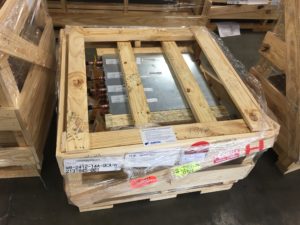
  • Crating equipment to minimize freight damage.OEM Replacement Coil
  • Shipping on time: Simply put, we consistently ship when we say we’re going to ship.
  • Select a freight carrier that delivers to your area without interlining or stopping at several terminals: This is when freight damage is most likely to occur!
  • Pay the carrier fee for a guaranteed delivery date: Although seemingly not well-known, most carriers offer a guaranteed delivery date for a fee of $50-$100. Paying the fee will ensure that your order is now a “priority”, and most freight companies schedule deliveries based on these “priorities” first. If both your order and delivery are critical and time-sensitive, Capital Coil can help you with exploring these delivery options.

Capital Coil & Air will work with you throughout the entire buying and shipping process because you as the customer, deserve to work with a hands on manufacturer that will not turn its back on you once the order has been placed. Please give Capital Coil a try on your next project!

RELATED POSTS

Quick-Ship Fan/Coils & Light Duty Air Handlers

Quick, Reliable & Uncommonly Fast

Top 10 Tips to Measuring Coils


What Does “Splitting” DX (Evaporator) Coils Mean

***Now Offering R-454B Refrigerant for All DX Coils

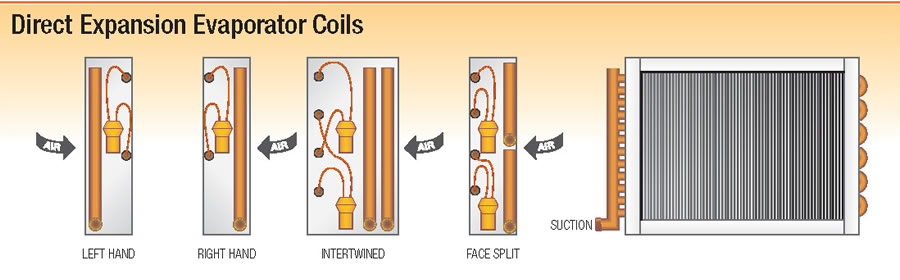
“Splitting” DX (Evaporator) coils is one of the toughest concepts to understand in the coil business. “Splitting” the coil simply means that (2) or more compressors can operate off of the same coil. One obvious advantage, or reason that you might “split” DX (Evaporator) coils is that you can shut down (1) of the compressors when the cooling load does not require it. This in turn saves energy, which saves $ when the cooling load is not operating at maximum design conditions. For example, let’s use a coil that is designed to give you (40) tons, but the coil is split so that (2) 20-ton compressors are feeding the same coil. If you only require ½ of the maximum load on any given day, you can shut down (1) compressor completely and operate the other one at 100%. This is a money-saving feature that you need to be aware of if you deal with DX coils on a regular basis. This requires special circuiting arrangements, and this is where the confusion starts with most folks. There are three primary ways to deal with this:DX (Evaporator) Coils

FACE SPLIT

Splitting the coil is nothing more than putting (2) completely separate fin/tube packs (coils) into one common casing. When you hear the term “face-splitting” a coil, you are drawing a horizontal line from left to right across the face of the coil and dividing the coil into a top and bottom half. It is like having two separate coils in one casing in that each half is circuited by itself. You hook up (1) compressor for the top half, and (1) compressor for the bottom.

In practice, this configuration is no longer used with much frequency because this arrangement leads to air being directed across the entire face of the coil. This disadvantage is especially apparent when only one half of the coil is in use because you’ll need a complicated damper/duct system to ensure that air is only directed to that portion of the coil in operation.

Row Split

“Row splitting” a coil is dividing the coil by drawing a line vertically and putting some portion of the total rows in (1) circuit, while putting the remaining rows in the other circuit. With this configuration, the air passes across the entire face of the coil, and will always pass across the rows that are in operation.

Please be aware that this configuration also comes with certain issues in that this kind of split makes it very hard to achieve a true 50/50 split. Let’s use an (8) row coil as an example. You would like to “row split” this coil with (4) rows/circuit, which would appear to be a perfect 50/50 split. The problem here is that the first (4) rows, located closest to the entering air, pick up a much higher portion of the load than the last (4) rows. In actuality, this coil’s split is closer to 66% / 34%, which will not match the 50/50 compressors. Another option is try to split the coil between (3) & (5) rows. While not 50/50 either, this configuration is closer. However, a new challenge arises because you have now created a coil that is very difficult to build and correctly circuit. In short, you need almost perfect conditions along with a degree of luck to achieve a true 50/50 split using this method.

Intertwined Circuiting

The most common to split coils today is to “intertwine” the circuiting. This means that every alternate tube in the coil is included in (1) circuit, while the other tubes are included in the (2nd) circuit. For example, tubes 1, 3,5,7,9, etc. in the first row are combined with tubes 2, 4, 6,8,10, etc. in the second row. The same tubes in succeeding rows form (1) circuit. You are essentially including every alternate tube in the entire coil into (1) circuit, which (1) compressor will operate. All of the remaining tubes not included in the first circuit will now encompass the second circuit.

The advantage of this configuration is that the air passes across the entire face of the coil, and, if one of the compressors is on, there are always tubes in operation. Every split is now exactly 50/50 because it cannot be any other way. Most DX coils are now configured in this manner due to these advantages.

Capital Coil has been, and will remain, the most reliable source for all commercial and OEM replacement coils. Our #1 job is to make to your job easier, so please reach out. You will be glad you did.


RELATED POSTS

CHILLED WATER, DX (EXPANSION) COILS & MOISTURE CARRYOVER

Now Offering R-454B Refrigerant for All DX Coils

DX & Chilled Water Cabinet Coils

Cooling Coils & Moisture Carryover

Moisture carryover is present on cooling coils where dehumidification happens.  Many people do not think it’s a problem…until you have moisture running down ductwork or spewing all over the inside of an air handler. If you’ve ever experienced that then you probably know all of these rules regarding moisture carryover.

  • Entering air temperatures of 80/67 of return air in the Northeast carry far less moisture than an outside 95/78 entering air temperature in Florida. Outside air always has more moisture.
    Cooling Coils

    -Your location plays a part as well. The drain pans will absolutely have be sized differently. Florida’s will be much larger in size.

  • Fin design is irrelevant when it comes to moisture carryover. Whether you have copper corrugated fins, or aluminum flat fins, plate fins or even the old fashioned spiral fins, none of it has any effect on moisture carryover.
  • Lastly, be careful when installing a new chilled water or DX (Evaporator) Coils in a system. Many end users like to increase the airflow on older coils because those old coils can act like filters, the fins are covered in dirt/dust and you’re not getting the same airflow through the coil. This dirt on the coil also semi-prevents moisture carryover. When that brand new chilled water coil is installed, the airflow might be higher than that of 550 ft/minute, which of course will cause moisture carryover problems. 

Please give us a call with any questions about your coil, your system or its design. Capital Coil is here to help you avoid situations like the one described in this post, and we would love for the chance to work with you!


RELATED POSTS

10 Things You Need to Know About Chilled Water Coils

Top 10 Chilled Water Coil Facts

Chilled Water Coil Circuiting Made Easy


Case Study: We Need These Coils on a (5) Day Quick-ship

In late June, Capital Coil received a call from a Trane office in Ohio regarding quick-ship availability. One of Trane’s top customers had an urgent need for (12) large chilled water coils with stainless steel casing. The problem/hurdle that they were encountering was that they needed all (12) coils to be built and ship out of the factory in (5) business days. Completion of the whole project was 100% contingent on them receiving the coils in their specified time-frame. An additional complication was the fact that July 4th was the following week, and they needed to have the coils ship prior to the holiday.

Trane shopped the project around to different manufacturers, but not one could guarantee to ship in (5) days. Some manufacturers waffled and claimed that they could have them built in (6) or (7) days, but not one could guarantee to ship in (5) days. A sales rep in that same Trane office, who had worked with Capital Coil previously, suggested that his co-worker reach out to us to see what we could do. After speaking with Trane’s project manager, we immediately contacted our head of production to make sure that we had the capacity to complete all (12) coils in the required (5) days. She assured us that we had the materials and manpower on-hand to get them all built and ship on time. We agreed to accept the project and began work on the coils immediately.

Due to the size of the project, as well as it’s time-sensitivity, we had multiple calls daily with our factory to ensure that everything was proceeding on schedule. We then gave Trane daily status updates, so they were constantly informed of everything from the brazing of the coils to entering the final testing phase. Chilled Water Coil

As promised, all (12) coils were built correctly and shipped out in the required (5) days. Our logistics team was then in constant communication with the freight company to make sure that the delivery was on schedule. And just like during the production phase, we passed daily tracking updates along to Trane, so they knew where their coils were at all times and when they could expect delivery. All (12) chilled water coils arrived on July 3rd with zero freight damage, and the project was completed on time!

A company as large and influential as Trane can have their coils built by anyone, but Capital Coil was the only manufacturer that could guarantee to have their coils built and shipped by a required date. Additionally, in working so closely with Trane throughout the whole process, they were kept up-to-date in real time from the start of production to final delivery.

Capital Coil offers a level of service that you won’t get with other manufacturers. When we guarantee to ship by a certain date, we stand by that guarantee, or you do not pay!


Trane’s project manager’s comments to Capital Coil upon completion/delivery:

“This will help us get a jump on this project prior to the big event taking place next week! 

I will make sure to share your information with others across our great lakes region about our experience with your company, so that they know we have THIS option to go to for our coil needs. THANK YOU ALL!!”


Syracuse University Athletic Dome Renovation

Capital Coil & Air prides itself on its ability handle all jobs – large or small! We quote anywhere from 25-50 projects/day, and there is typically a very diverse mixture of equipment and overall size & scope of projects that need to be engineered and quoted. The majority of our business comes from repeat customers because they know that we treat every job and request with the same importance – regardless of size. Today’s newsletter highlights one of our largest jobs to date to illustrate the fact that Capital Coil has the ability handle any job…no matter the size and scope.

Capital Coil has long understood that your businesses and customers depend on fast responses, fast engineering, fast shipping, and top-quality products. Again, whether it’s (2) small hot water duct-coils that you need overnighted, or banks of chilled water coils, Capital Coil wants you as our customer to be satisfied that you got a “fair-deal” with us on each and every job.

The Syracuse University Dome (SU Dome), in Syracuse, NY underwent an extensive renovation at a cost of $205 million. The old roof was air-inflated/supported and was replaced with an updated design-frame roof. As part of the total renovation, the building also changed out it bathrooms, Wi-Fi, LED lighting, and entire HVAC system. As part of the renovation, Capital Coil was asked to build (64) chilled water coils as a part of the air conditioning renovation project.Capital Coil

Modular Comfort Systems, located in Syracuse, contacted Capital Coil & Air during the planning and budgeting phase of this project. Modular Comfort Systems is a large and highly respected HVAC Representative in central New York State. After purchasing coils from CCA, they re-sold those same coils, as well as other HVAC equipment to the also very highly respected Burns Bros. Mechanical Contractors – also located in Syracuse. Burns Brothers has been working in HVAC, plumbing and process piping for more than 100 years. Both of these companies are the types of companies that Syracuse University would entrust with such an important and high-profile job.

Capital Coil built (64) free-standing chilled water coils in sizes ranging from (33” x 93”) – (33” x 118”). All (64) coils are (8) rows with 304 stainless steel casing, increased tube wall thickness of .035”, with connections built and oriented at 90 degrees to facilitate ease of piping. The coils have all been highly engineered and are exactly correct for this application/project. Each coil weighs over 1,000 lbs, so Capital Coil split up the total order into (2) separate shipments, two weeks apart, in order to help the contractor receive the delivery.

The point of this case-study is to show how proud Capital Coil & Air is to have been tasked with building coils for such a high-profile project. Capital Coil is also proud to have worked with professional organizations like Modular Comfort Systems and Burns Brothers Mechanical. But regardless of the size of the project, you’ll receive the same attention and support as anyone else who reaches out for our assistance. Please contact us as we look forward to working with you on your next project!!

RELATED POSTS

Boca Raton Hospital Covid-19 Care Condenser Coils

10 Things To Know About Chilled Water Coils

Guidelines For Air Velocities

Coils and Counter-flow: 5 Common Questions


Large enough to service all of your commercial replacement coils, but small enough to care about what you think

With replacement coils, as a customer, you have more choices than ever. But don’t you ever get tired of dealing with largely nameless corporations with high staff turn-over? As you’ve probably Replacement coilsexperienced first-hand, there are plenty of companies in the HVAC industry that fit this description. You are simply a number or a project instead of a customer/partner with a name and face. If given the alternative, would you rather deal with a company who knows you and is interested in your success, or a company who’s sole interest is finding out when your check is in the mail? Don’t you want somebody that values your business, regardless of the $ amount, and will go the “extra mile” for you when you need it? Capital Coil & Air places a great emphasis on those attributes in our business relationships, and common sense tells us that you probably do as well.

Capital Coil & Air was created as a family-owned business, with Matt and Dan Jacobs as joint owners and partners. What differentiates Capital Coil & Air from our competition is that we are big enough to handle all of your coil requirements, but still small enough to know who our customers are and what they need. We have decades worth of knowledge and expertise, and because of that, we have learned to not try to be all things to all customers. Capital Coil’s knowledge and experience is in the replacement and design/build market, and we are very disciplined at “staying in our lane”. Additionally, we’d much prefer to have customers and relationships that last years instead of one-off transactions. Working with Capital Coil is as simple and easy as it gets, and here are some examples:

  • When requesting a quote, we almost always respond within the same hour, or within 24 hours at the latest.  We recognize that there is an urgency to almost every coil order, and your time is valuable. In the end, a 3 day delay for a quote and/or revisions to said quote, is the same as if the manufacturer shipped your coil 3 days late.
  • When you place an order with us, we’ll send you an order acknowledgment within 24 hours detailing what you ordered, overall costs, and when it is going to ship.
  • We understand the value and necessity of clear communication. To minimize mistakes, we attach submittal drawings for every quote and order. We want to communicate with you throughout the entire buying process to make sure we are building exactly what you need.  More communication leads to less mistakes and wasted time.
  • We follow up on our shipments very carefully. We’ll work with both you and the carrier to help track your shipments to ensure your order gets to you the fastest way possible.
  • We will not ignore you simply because a sale is complete. Before, during and/or after installation, we’re here to answer your questions and help in any way possible.
  • If you need some help on pricing, we’ll do our best to work with you. While every job is unique, we want to work with you for the next 20 years, rather that a one and done purchase.

You now have some insight into our values and who we are at Capital Coil & Air. Please contact us for any future coil requirements. We greatly value your business and look forward to be your coil replacement partners on your next project!

RELATED POSTS

Top 10 Questions You SHOULD Be Asking Your Coil Supplier

Your Commercial HVAC Replacement Experts-Why Work With US?

Customers are a business’ top priority. So why is customer service such a challenge?

Quick, Reliable & Uncommonly Fast


How Did The HVAC Commercial Coil Replacement Market Originate???

How in the world did the commercial coil replacement market start? This specific newsletter is more of a story than anything technical that we have covered in most of our previous emails or blogs. Rather, this is the story of how one manufacturer’s representative, Robert Jacobs, almost by accident, stumbled upon the concept of the coil replacement market back at a time when the only way one could get a replacement coil was to go through the original equipment manufacturer – (OEM). In full disclosure, Bob Jacobs is the VP of Business Development with Capital Coil & Air.

Way back in the day – (1970’s) – HVAC coils were not stand-alone pieces of equipment as they are considered by some now. Coils were nothing more than a single part in an Air Handling Unit (AHU) or a bank of coils. Like a bearing, a drive, or fan wheel, coils were simply part #’s that one needed to reference with the OEM in order to get a replacement built. This situation was a very good deal for the OEM’s because much like car parts, they could charge upwards of 3x’s the original cost of the coil or “part”. And, it was built according to their schedule/timeline, not yours’.

In the 1970’s, Bob Jacobs was a manufacturer’s rep in the Philadelphia-area, and his main line of equipment was Bohn Aluminum & Brass. Bohn was a division of Gulf & Western and competed against many of the top manufacturers, such as Trane & Carrier. For comparison-sake, Bohn was very similar to what Dunham-Bush is today.Commercial Coil Replacement

During this period, Bob Jacobs was asked by numerous local contractors to replace old and/or broken coils. Due to the lack of a quality alternative, he initially used Bohn for coil replacement projects, but replacing coils was not exactly Bohn’s “sweet spot”. It should be mentioned that during this period, replacement coils were not really on any manufacturer’s radar as a separate product – hence the point of this story. Regardless of the OEM, standard lead-times were upwards of (12) – (14) weeks, and those “replacement parts” were very expensive. It was during this period that he realized that there was serious potential for some kind of HVAC coil replacement market. To test this theory, he initially spent $75.00 on an ad deep within the classified section of “Air Conditioning & Refrigeration News”. It was the old type where one had to “circle the bingo card” to request additional information, and this single ad received over 525 inquiries from across the country!! This eye-opening initial response to his idea made him realize that he had come across something good, but now the challenge was how to satisfy this new market. Bob Jacobs initially contacted Bohn to see if there was any interest in building replacement coils, as well as marketing the idea across the United States. Bohn essentially laughed at the idea and countered that he’d be violating his sales rep agreement by going into the territories of other reps. This was very flawed reasoning as none of the other reps were engineering or selling replacement coils in the first place! Within a week, he had canceled his agreement with Bohn and was looking for alternative vendors. He also decided to run a second ad that received another 450 inquiries; furthering his idea of the need for a coil replacement market.

The next step was to reach out to Singer Coils (yes, like the sewing machine), who was located in North Carolina. Because they had built coils for other manufacturers, he pitched his idea to them along with the request that they build his special or “custom” coils. While initially skeptical of the concept, the doubters were proved wrong as his firm gave Singer over $3,500,000 in business in that first year alone. Admittedly, that $ amount in the first year in a brand new market is impressive whether it’s 1971 or 2021!!

One must also remember that these were the days before fax machines and most certainly before email and the internet. Quote requests for coils were received via USPS and were hand-drawn sketches written on things, such as legal pads, envelopes and pretty much every way imaginable compared with today. Because everything was starting from scratch at this time, there were no coil model libraries or other materials to cross-reference, so going through a random building trying to locate the correct coil to replace could be torturous. However, over the next 6-8 years, his business grew quite rapidly, and he was able to collect and build a substantial reference library of coil drawings and other relevant information. The experiences of the prior 8 years, coupled with his firm’s knowledge of commercial coils, eventually allowed his company to begin building their own replacement coils for the 1st time, rather than relying on a 3rd party manufacturer.

Bob Jacobs’ original coil replacement company developed relationships with literally thousands of customers and laid out the initial blueprint for success in the coil replacement business. Due to that success, you now have approximately (10) alternatives that have attempted to copy his model as it’s become obvious that this is a lucrative market. Even OEM’s have recognized that they need to have a piece of the replacement market. But an important point to remember is that just because a company says or even advertises that they are in the coil replacement business does not mean that they are any good or even fully understand how the replacement market operates. For example, most coil manufacturers today are still more interested in the production of larger quantities, so replacement coils are “special” to them. In other words, sometimes these manufacturers want to be in the coil replacement business, and other times, without telling you, they do not. And not knowing where a company’s focus or priorities lie makes it extremely difficult to work with them under emergency conditions.

Bob Jacobs was there at the beginning and is still quite active within Capital Coil. Having daily access to a resource that literally invented the coil replacement market is what separates Capital Coil from all other competitors. Capital Coil will continue to be your coil replacement experts, and we greatly look forward to the chance to work with you on future projects.

RELATED POSTS

How to make your HVAC OEM Replacement Coil Buying Process Easier??

How to Identify Different Types of Coil Manufacturers

Does Your HVAC Coil Selection Program Leave You With More Questions Than Answers?


Boca Raton Hospital Covid-19 Care Condenser Coils

In (3) days, Capital Coil & Air Manufactured and Delivered (4) Large Condenser Coils!!

A large HVAC contractor in South Florida recently contacted Capital Coil & Air with a request to modify an existing system of Carrier 38 Series Microchannel Coils with (4) large condenser coils on an emergency basis. The main goal was to change over from microchannel to standard copper tube/aluminum fin condenser coils. The one expressed requirement for this project was that this change needed to happen very quickly. See below for a summary and timeline of the project:

Condenser Coils
  1. Monday – The contractor reached out to Capital Coil & Air with the required information needed for new condenser coils.
  2. Tuesday – Capital Coil calculated the changeover from microchannel to standard coils for this retrofit. Capital Coil & Air then provided all of the necessary engineering and pricing data for the order. Included were all of the condenser coil drawings, ready for the customer’s approval, as well as all of the needed IOM’s (Installation, Operation & Maintenance Manual) for eventual installation.
  3. Wednesday – By Wednesday morning, the contractor approved the drawings and allowed the project to move forward. Construction on the coils began that afternoon. In less than 1.5 days, this job went from a brief phone discussion into full production!
  4. Friday – The coils were completed, crated and made ready to ship in less than 48 hours after production commenced. Capital Coil then contacted FedEx to ensure that the coils would be picked up that same Friday and overnighted to South Florida for Saturday delivery to the jobsite.
  5. Saturday – The contractor received the condenser coils and installation was completed that same weekend!

In all, the time from the original phone call to installation occurred in less than a week. Capital Coil takes great pride in our response times, as well as our ability to handle projects in emergency situations.

For various reasons, the HVAC industry has always required quick-shipments. Capital Coil’s 99% success rate with quick-shipments over the last 5+ years has us particularly well-suited to handle whatever situations may occur during the Covid-19 emergency. Please do not take any chances with “untested” manufacturers right now, and please consider Capital Coil for all of your quick-ship needs!!

RELATED POSTS

Top 10 Tips For Measuring Coils

Four Things To Know When Buying Replacement Coils

IN NEED OF A COIL YESTERDAY??

Quick, Reliable & Uncommonly Fast


Differences Between Commercial & Industrial Coils??

The best performance you can get out of commercial coils is with copper tubes/aluminum fins. An extremely important fact to take into account is that when you change the materials of construction to an industrial coil, there’s always a drastic change in the performance. 

The explanation is really quite simple: when we build a stainless steel or 90/10 cupro-nickel coil, the materials don’t match up in terms of heat transfer to copper tubes/aluminum fins. So what does that mean? Using a chilled water coil as an example – you have a (4) row chilled water coil with copper tubes/aluminum fins, and you want to change to stainless steel. You will need to move to an (8) row coil to meet that same performance.                                                                                                                                                                          Commercial Coils

What conditions require these types of materials? The most common is with high pressure applications. Anything above 200 psig requires that you change construction materials from copper tube/aluminum fin to a special material that is able to work better under those conditions. The other instances are when you’re dealing with high temperatures or corrosive atmospheres. 

Capital Coil & Air manufactures and designs a wide assortment of heavy-duty industrial coils to withstand the environment of industrial applications.  Standard and custom designs are available for new and retrofit installations.  Our industrial coils are manufactured from quality materials that are heavier grades and thicknesses.  This ensures dependable performance and longevity, even under the most demanding conditions. While most manufacturers throw out astronomical prices or lead times that can better be explained as “months” rather than weeks, Capital Coil’s lead times are (4-5) weeks for cupro-nickel and (5) weeks for stainless steel.  

Whether it’s for boiler air preheating, pulp and paper drying process, lumber drying process, textile drying process, chemical heating process, Capital Coil & Air provides high quality industrial coils designed for easy maintenance and low operating costs.  With capabilities to build fluid coils for water, glycol, oil, and other liquids as well as refrigerant coils and steam coils for high pressures, we can easily meet all of your industrial coil requirements!

RELATED POSTS

Coil Costs: What Will Make Your HVAC Coils More Expensive?

Why are HVAC Coils Copper Tube and Aluminum Fin?

Top 5 Reasons Commercial HVAC Coils Prematurely Fail