Guidelines For Air Velocities

The height, length and resulting air velocities greatly figure in everything in determining the size and performance of a coil. Step # 1 in determining the size and performance of a coil is dependent upon understanding face & air velocities of air across the coil. Whether you use CCA’s coil selection program to help size the coil, or you are replacing an existing coil; the height, length and resulting velocity determine everything.

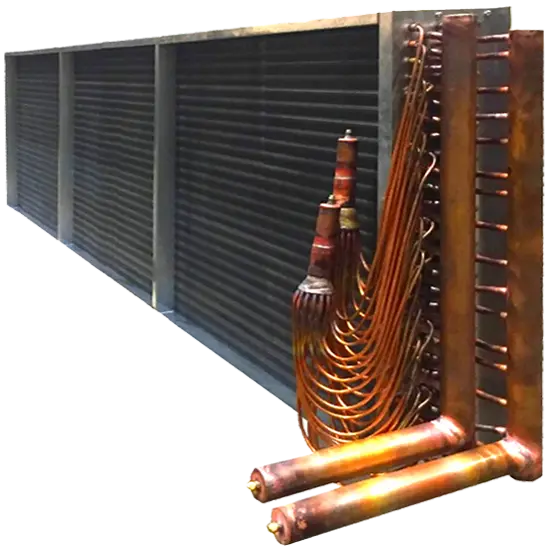
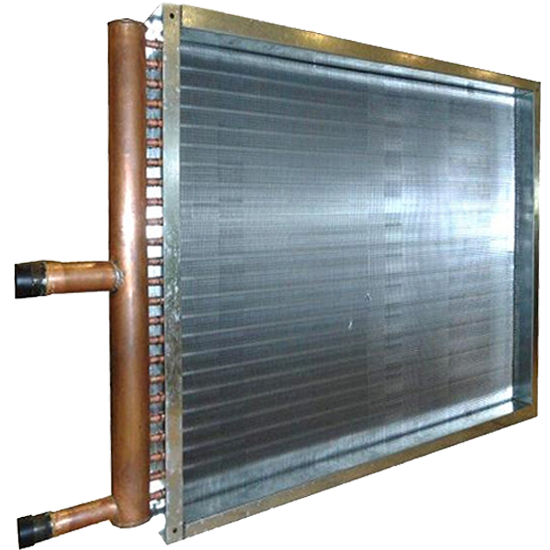
Hot Water Booster Coils

air velocities

Every coil has a specific, optimum velocity, so you want to make sure you are within 30% (+ or -) of that number. For example, booster coils have an optimum velocity of 800 ft/minute. That means that you can drop your velocity to 600 ft/minute, or conversely, increase the velocity to 1,000 ft/minute. The duct velocities are almost always higher, which means that you will need to transition to a larger coil. Try to get to as close to 800 ft/minute as possible, while sizing your coil to make the transition as easy as possible. Everything with coils is a balancing act.

Hot Water & Steam Coils

Like booster coils, hot water and steam coils should also have face velocities at approximately 800 ft./minute. Both steam & hot water coils have only sensible heating, which is why their face velocities can be the same. Face velocities ultimately control the coil’s cost, so 800 ft./minute really is a heating coil’s “sweet spot”.

If you are purchasing an air handler unit, oftentimes the heating coil is smaller than the cooling coil because the face velocities on heating coils can exceed those of cooling coils. Due to water carry-over, cooling coils cannot exceed 550 ft/minute, while heating coils only deal with sensible heat.

Chilled Water & DX Coils

Due to the limited face velocities of cooling coils, your choices are more limited. With cooling coils, your face velocity must be somewhere between 500 ft./minute-550 ft./minute. Remember that when dealing with cooling coils, you are dealing with both sensible and latent cooling, so the coil is wet. When you exceed 550 ft./minute, water carry-over occurs past the drain pans.

If you are purchasing an air handler unit, you probably will not have worry about the coil’s face velocity as most coils come pre-sized at the acceptable face velocities. Fan coils also come pre-sized with the correct CFM’s. However, if you are replacing an existing cooling coil, the face velocity must remain at or below 550 ft/minute!!

 Air Stratification Across The Coil

Air does not travel equally across the face of a coil. If you were to divide a coil into (9) equal sections, like a tic-tac-toe board, you would see a high percentage of air travelling through the center square, rather than the corner squares. In a perfect air flow scheme, 11% of the air would travel through each of the 9 squares, but that is not what happens. Because more air travels through the center of the coil, you want to avoid putting a fan too near the coil. Due to central air flows, most systems are draw-thru, rather than blow-thru. This is also why you want to avoid installing your coil near any 90 degree angles/turns in the ductwork. Avoid any situations that contribute more than the “natural” air stratification to help ensure your coil is at maximum efficiency.

In some situations involving cooling coils, you will have water carry-over even when the coil is sized correctly. How can this happen? Think about the tic-tac-toe board again. Air velocities are exceeding 700 ft./minute in the coil’s center, while the corners are around 300 ft./minute. This cannot and will not work.

Coils do not have any moving parts. They simply react to the air across the outside of the coil and whatever is running through the inside of the coil. Coils are 100% a function of your entire system, as well as the installation in general.

Capital Coil & Air is here to help with any coil selections that will help avoid costly missteps that lead to wasted time and money. Call us on your next project, we greatly look forward to working with you!

RELATED POSTS

Chilled Water, DX (Expansion) Coils & Moisture Carryover

Tips on Hand Designation & Counter-flow

Coils and Counter-flow: 5 Common Questions

CATEGORY SUCCESS

Why Cooling Coils Need to Be Replaced

In theory, properly engineered and maintained cooling coils should deliver 20+ years of service life. In practice, most coils are replaced prematurely. The root causes are typically operational neglect, environmental exposure, improper application, or design limitations. Below are the three primary drivers of early replacement, along with technical context.


1. Increased Air Resistance from Coil Plugging

Cooling Coils

Failure Mechanism:

Airborne contaminants (dust, pollen, fibers, grease aerosols) penetrate beyond the fin surface and embed deep within the coil core. Once lodged between fins and tubes, they cannot be fully removed by routine air-side cleaning.

Primary Causes:

  • Poor filtration

  • Irregular filter replacement

  • Lack of annual coil cleaning

  • High-particulate environments

Performance Impact:

  • Increased air-side static pressure

  • Reduced airflow (CFM)

  • Decreased heat transfer 

  • Reduced system capacity and efficiency

Plugged cooling coils often force the fan to operate outside design conditions, increasing energy consumption while lowering cooling output.


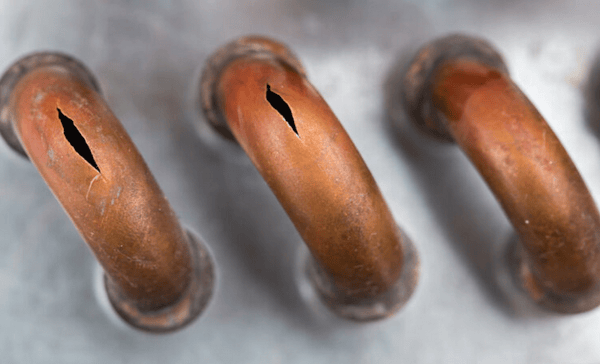
2. Freeze Damage

https://www.resideo.com/us/en/-/media/Resideo/Corporate/Media%20Images/Featured%20Articles/120121/cracked-pipe_850.jpg?h=567&hash=607EE03C7CC57A4AC0E0DCCC6025A398&rv=9d8b4e00150d48e49dbc73a3291c6451&w=850
 

Failure Mechanism:

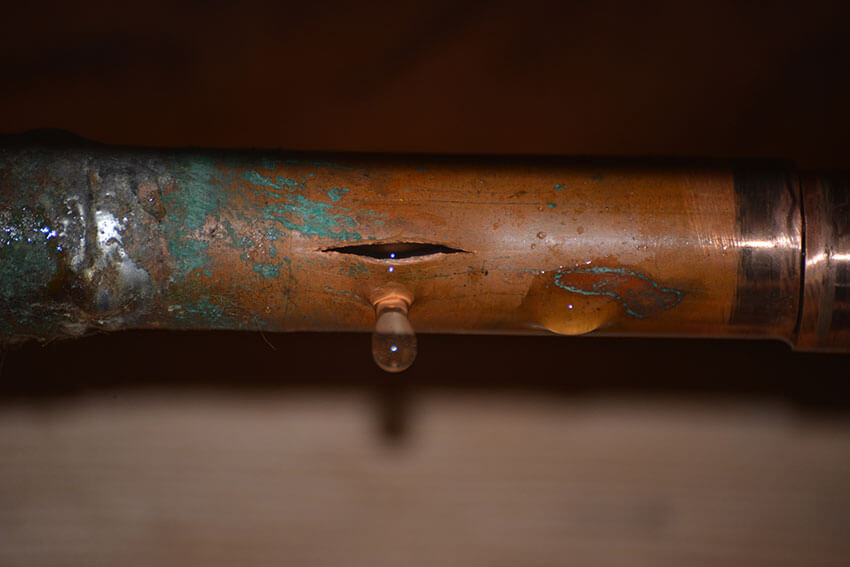
Water trapped in coil tubes expands during freezing, generating internal pressures sufficient to rupture copper tubes.

Why It Happens (Even When Dormant in Winter):

  • Circuiting designs that prevent full drainage

  • Drain connections positioned above low tubes

  • Lack of glycol protection

    broken return bends
  • Inadequate winterization procedures

Consequences:

  • Multiple hidden leaks

  • Thinned tube walls due to pressure expansion

  • Progressive failures after initial repair

  • High risk of recurring leaks

Once a coil experiences extensive freeze damage, repair becomes unreliable. The metallurgical integrity of the tubes is compromised, making replacement the only durable solution.


3. Corrosion

https://static.wixstatic.com/media/ea3647_d85a052e6f8a4b5ab1c1d0555c623a28~mv2.jpg/v1/fill/w_1000%2Ch_750%2Cal_c%2Cq_85%2Cusm_0.66_1.00_0.01/ea3647_d85a052e6f8a4b5ab1c1d0555c623a28~mv2.jpg
Corrosion occurs on both the air side and the fluid side, often simultaneously.

Air-Side Corrosion

  • Salt-laden atmospheres (coastal or industrial)

  • Hydrogen sulfides (e.g., wastewater treatment facilities)

  • Chemical exposure in manufacturing environments

Visual Indicator:

A white ring around the tube-to-fin interface. This indicates loss of mechanical bond and reduced thermal conductivity between tube and fin.

Effects:

  • Reduced heat transfer

  • Loss of tube/fin contact

  • Core blockage from corrosion byproducts

  • Elevated air pressure drop

Water/Refrigerant-Side Corrosion

  • Raw, untreated water

  • High mineral content

  • Improper water chemistry control

Internal corrosion weakens tube walls and leads to pinhole leaks, particularly in copper tubing exposed to aggressive water conditions.


Key Takeaway

Cooling coil replacement is common—but preventable. Most failures are not random; they are the result of design limitations, environmental exposure, or maintenance gaps. Replacing a coil without diagnosing the root cause often guarantees another premature failure.

If longevity, efficiency, and reliability matter, the solution isn’t just replacement—it’s engineered improvement.


RELATED POSTS

OEM Replacement Coils: Repair or Replace


CATEGORY SUCCESS