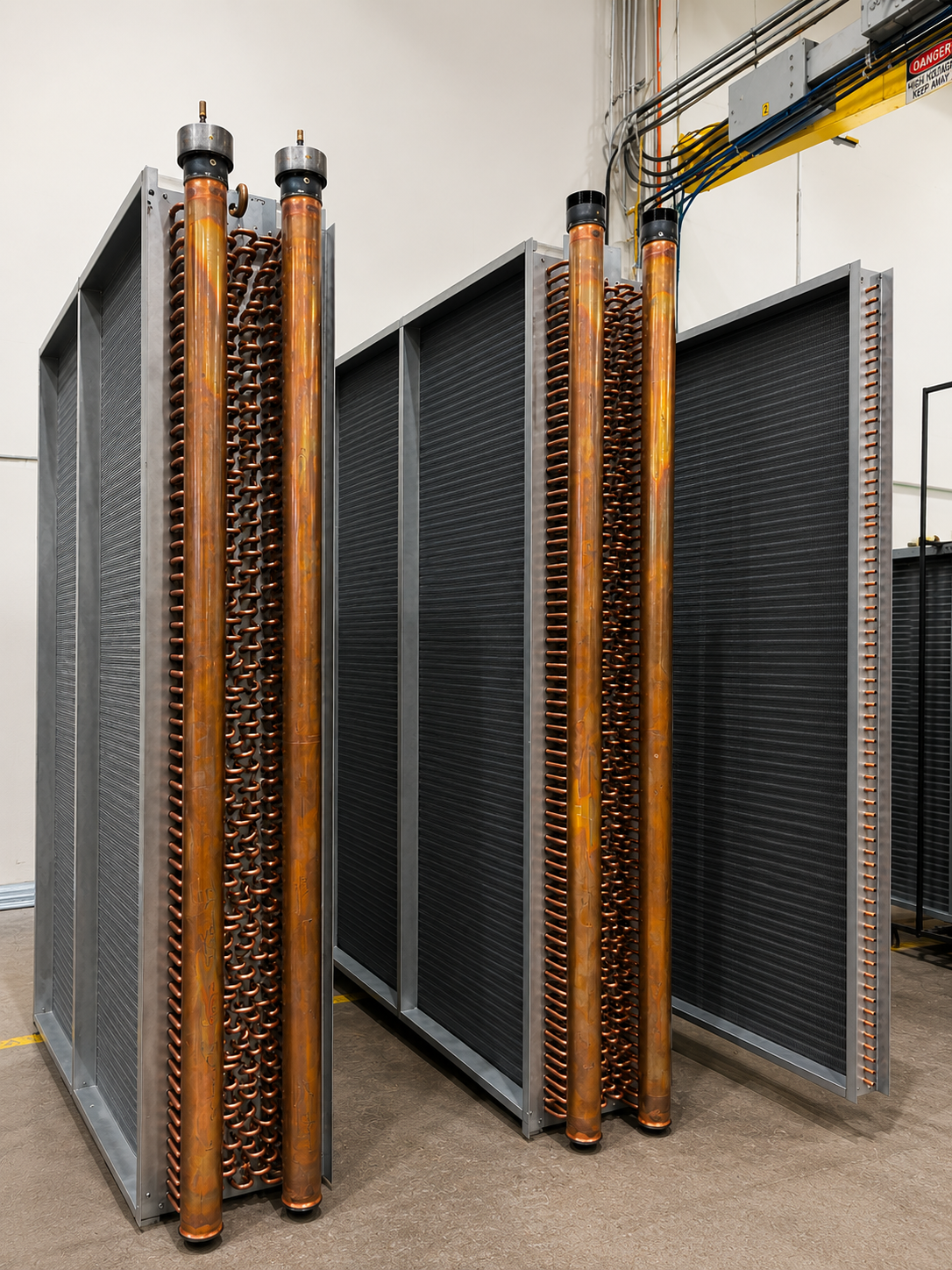
Replacing Carrier Chilled Water Coils

For HVAC professionals, replacing Carrier chilled water coils is a task that demands precision. One miscalculation in dimensions, connection types, or circuit configurations can turn a straightforward replacement into a significant challenge, leading to delays and complications like compromised airflow or customer callbacks.

Why Precision Is Critical

Carrier chilled water coils are engineered with extremely precise specifications. Even the slightest deviation can result in issues such as:

  • Airflow Restrictions: A poor fit can obstruct air movement, affecting system efficiency.
  • Inefficient Heat Transfer: Suboptimal coils may lead to inadequate cooling performance and increased energy costs.
  • Connection Misalignment: Mismatched connections complicate the installation process and can lead to leaks or failures.
  • Extended Installation Times: Inaccuracies often necessitate additional rework, wasting valuable time on the job site.

It’s crucial to explain the importance of attention to detail to your clients. A so-called “replacement” coil that doesn’t meet specifications can inadvertently introduce new problems rather than solving the existing ones.

The Capital Coil Advantage

In the world of HVAC, many coil manufacturers overlook the significance of these specifications, opting for oversimplified solutions that can create headaches later on.

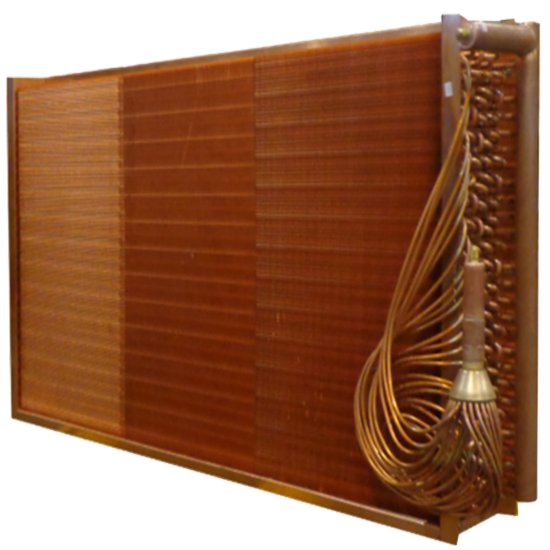
Here’s where Capital Coil steps in. Whether you have:chilled water coil

  • A clear model tag
  • A partial number
  • Or even just a worn-out coil

We have the expertise to provide a reliable solution. Our team has extensive experience manufacturing the coil types you depend on daily, ensuring you receive high-quality products.

Cross-Referencing Capabilities

In many cases, we can cross-reference Carrier coil models accurately, thanks to our comprehensive manufacturing history. If direct cross-referencing isn’t feasible, we can also work from the drawings you provide, creating a custom solution that meets your precise requirements.

Take-aways 

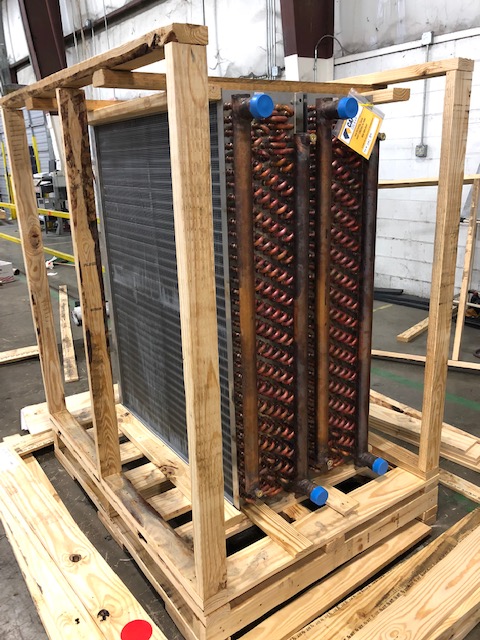
Replacing a Carrier chilled water coil doesn’t have to be a gamble. By collaborating with Capital Coil, you gain a reliable partner who understands the critical elements of the job: ensuring a perfect fit, optimizing performance, and getting the installation right the first time. 

For additional information or to discuss your specific coil replacement needs, feel free to reach out to the Capital Coil team. Let us help you streamline your projects and enhance your HVAC services!

RELATED POSTS

Looking For A Trane Replacement Coil

Top 10 Chilled Water Coil Facts

Why Cooling Coils Need to Be Replaced

Why Cooling Coils Need to Be Replaced
In theory, properly engineered and maintained cooling coils should deliver 20+ years of service life. In practice, most coils are replaced prematurely. The root causes are typically operational neglect, environmental exposure, improper application, or design limitations. Below are the three primary drivers of early replacement, along with technical context.


1. Increased Air Resistance from Coil Plugging

Cooling Coils

Failure Mechanism:

Airborne contaminants (dust, pollen, fibers, grease aerosols) penetrate beyond the fin surface and embed deep within the coil core. Once lodged between fins and tubes, they cannot be fully removed by routine air-side cleaning.

Primary Causes:

  • Poor filtration

  • Irregular filter replacement

  • Lack of annual coil cleaning

  • High-particulate environments

Performance Impact:

  • Increased air-side static pressure

  • Reduced airflow (CFM)

  • Decreased heat transfer 

  • Reduced system capacity and efficiency

Plugged cooling coils often force the fan to operate outside design conditions, increasing energy consumption while lowering cooling output.


2. Freeze Damage

https://www.resideo.com/us/en/-/media/Resideo/Corporate/Media%20Images/Featured%20Articles/120121/cracked-pipe_850.jpg?h=567&hash=607EE03C7CC57A4AC0E0DCCC6025A398&rv=9d8b4e00150d48e49dbc73a3291c6451&w=850
 

Failure Mechanism:

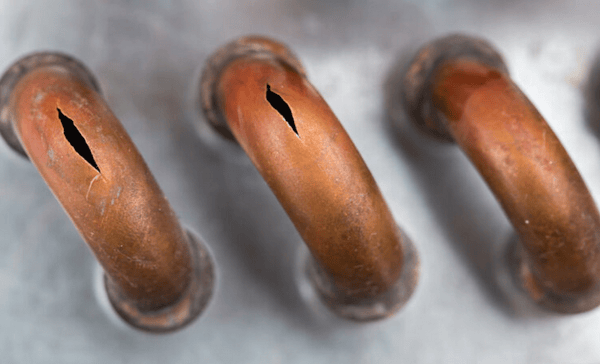
Water trapped in coil tubes expands during freezing, generating internal pressures sufficient to rupture copper tubes.

Why It Happens (Even When Dormant in Winter):

  • Circuiting designs that prevent full drainage

  • Drain connections positioned above low tubes

  • Lack of glycol protection

    broken return bends
  • Inadequate winterization procedures

Consequences:

  • Multiple hidden leaks

  • Thinned tube walls due to pressure expansion

  • Progressive failures after initial repair

  • High risk of recurring leaks

Once a coil experiences extensive freeze damage, repair becomes unreliable. The metallurgical integrity of the tubes is compromised, making replacement the only durable solution.


3. Corrosion

https://static.wixstatic.com/media/ea3647_d85a052e6f8a4b5ab1c1d0555c623a28~mv2.jpg/v1/fill/w_1000%2Ch_750%2Cal_c%2Cq_85%2Cusm_0.66_1.00_0.01/ea3647_d85a052e6f8a4b5ab1c1d0555c623a28~mv2.jpg
Corrosion occurs on both the air side and the fluid side, often simultaneously.

Air-Side Corrosion

  • Salt-laden atmospheres (coastal or industrial)

  • Hydrogen sulfides (e.g., wastewater treatment facilities)

  • Chemical exposure in manufacturing environments

Visual Indicator:

A white ring around the tube-to-fin interface. This indicates loss of mechanical bond and reduced thermal conductivity between tube and fin.

Effects:

  • Reduced heat transfer

  • Loss of tube/fin contact

  • Core blockage from corrosion byproducts

  • Elevated air pressure drop

Water/Refrigerant-Side Corrosion

  • Raw, untreated water

  • High mineral content

  • Improper water chemistry control

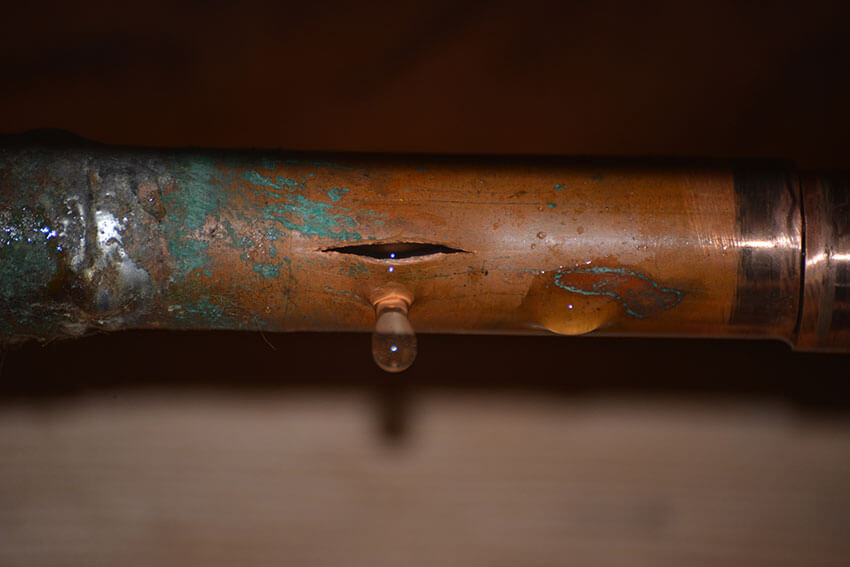
Internal corrosion weakens tube walls and leads to pinhole leaks, particularly in copper tubing exposed to aggressive water conditions.


Key Takeaway

Cooling coil replacement is common—but preventable. Most failures are not random; they are the result of design limitations, environmental exposure, or maintenance gaps. Replacing a coil without diagnosing the root cause often guarantees another premature failure.

If longevity, efficiency, and reliability matter, the solution isn’t just replacement—it’s engineered improvement.


RELATED POSTS

OEM Replacement Coils: Repair or Replace


Looking For A Trane Replacement Coil

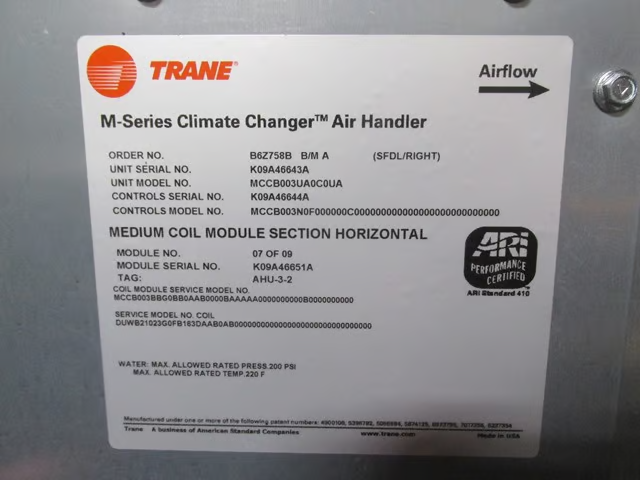
If you need Trane replacement coil within a Trane system, but aren’t sure about the dimensions or decoding the model #, send this to Capital Coil & Air for pricing. On most Trane AHU’s, the AHU model #, as well as the coil or “part #”, is listed as “Service Model No Coil”. If you see this, send it over, and the sales team at Capital Coil will handle the rest. Great pricing with the ability to be built as fast as is needed!Trane replacement coil


Different Types of Steam Coils

There are two types of steam coils:  standard steam coils, which are used in most reheat applications, and steam distributing coils, which are used in applications where the entering air temperature is below 40 F degrees.  Many times, this type of coil is also known as a “non-freeze” coil, but that name is misleading because in reality, there is no such thing as “non-freeze”. 

Standard Steam

Standard steam coils operate a lot like hot water coils, but the construction is very different even if the coils appear to be constructed the same.  The supply and return connections are often on the same end like a hot water coil.  But, steam is very different than hot water, and the coil must be built for and circuited for steam.  Keep in mind that steam is always more erosive than hot water.  The brazing and tube wall thickness must account for steam. ALWAYS remember that even low pressure steam is more erosive than hot water, and a steam coil needs to be built accordingly.

Steam Distributing (Non-Freeze)

Steam distributing coils are a completely different type of coil because they are constructed as a tube within a tube. Every place that you see an outside tube or header, there is an inside tube and header that you can’t see. The steam on the inner tube keeps the condensate in the outer tube from freezing.  The purpose of the Steam Coiloriginal coil design was to distribute the steam evenly along the length of the coil and to eliminate any dead spots on the coil.  A byproduct of this coil was also found.  The coils didn’t freeze nearly as easily as the standard steam coil, so the coils became known as “non-freeze”, which as mentioned, is not completely accurate.  Any coil can freeze under the right conditions, but, this design is what needs to be used when the entering air is under 40F degrees!!! 

Steam Coil Design

Steam coil designs can be very tricky.  Steam coils are totally a function of the system and installation, while other coils operate more independently of the system.  There needs to be correctly designed traps, and they need to be installed in the correct place and depth in the system.  Often, vacuum breakers are also needed in the system.  The piping must also be installed correctly to make sure the steam is entering the coil and not the condensate.  Even with all of those factors, you’ll need a correctly designed steam coil that matches the steam pressure, length of the coil, and the entering air temperature.  Coils can freeze easily.  Coils can be too long in length and the steam cannot travel the length of the coil and distribute evenly.  Condensate can easily be trapped somewhere in the coil, and the result is water hammer. 

Capital Coil & Air has years of experience designing steam coils, and is here to answer any questions and help to design the right coil for your project! 

Related Topics

Frozen Steam Coils: How to Prevent it!

Commercial Steam Coils; Lengths & Controls

HEATING SEASON WILL SOON BE UPON US


How to Make Sense of Heating Coils

Various winter storms have already ripped through multiple parts of the country necessitating the obvious need for working heating coils!!  With conditions such as these, emergencies with your HVAC systems are almost inevitable. THIS is precisely when you need your coil supplier to have the speed and flexibility to be able to tackle whatever emergencies arise.Steam Coil

Of all the types of HVAC coils available, heating coils are probably the easiest to select and understand. Capital Coil has listed the three most common types of heating coils that you are likely to come across.

Hot Water Coils

When looking at a water coil, the first thing to remember is that it is in effect “dumb”. In other words, water coils do not know the temperature of the water moving through it. While standard HVAC water coils are mostly constructed in the same design, the number of rows contained within the coil is a key differentiator in determining if the coil is hot water or chilled water. 99% of all hot water coils are (1) or (2) rows based on performance requirements. The “Delta T” between the entering air temperature and the hot water temperature is very large. As a result, you only need a coil with (1) or (2) rows to do the job. Face velocities across the coil can be anywhere from 600 to 1,200 FPM (feet/minute), while water velocities are usually 2-4 FPS (feet/second). As a result, you will always end up with a (1) or (2) row coil with somewhere between 8-14 fins/inch.

Booster Coils

Hot water booster coils are just another variation of the standard HVAC hot water coil.  They are always (1) or (2) rows as well, but the casing is designed for duct work installation. This basically means there is usually a 1” or 1.5” casing on all four sides of the coil. You select the proper size of the coil to make sure the air velocity across the coil is correct and simply transition the duct work to make the casing size around the coil.  Generally speaking, the size of the coil face is larger than the duct size, so you must transition the duct to make it larger. Just remember, a booster coil is nothing more than a standard hot water coil that is used for duct work installation.

There can also be a casing variation called “slip & drive”, where the coil is installed in the duct work. The coil does not have the standard casing on all four sides like a flanged coil. Capital Coil’s selection program allows you to pick either option.

Steam Coils

The real secret to any steam coil installation is to know that steam coils are much more of a product of the entire system than any other coil; meaning that other coil types are much more independent of the system.  Steam coils require numerous considerations, such as traps, pitched casing, piping flexibility, and vacuum breakers.  Steam coils are also built according to steam pressure through the tubes and headers.  2 – 50 psig is considered “low pressure” steam for coils, while 50-100 psig is considered “medium pressure”. Anything over 100 psig is considered “high pressure” steam.  An important fact to remember is that each of these categories requires a separate kind of construction with different brazing and different materials.  Additionally, almost all steam coils are (1) or (2) rows deep. Steam coils are known either as “standard” steam or “steam distributing”, but the differences are very easy to understand.  Outside air temperatures below 40˚F require that you have a “non-freeze” steam distributing coil.

RELATED POSTS 

Stock Hot Water Coils – Quick Buyers Guide

Your Goals as a Buyer of Commercial HVAC Replacement Coils

Coil Costs: What Will Make Your HVAC Coils More Expensive?


Condenser Coil Failing? Here’s probably why….

Did you recently turn on your DX systems only to find your Condenser Coil is not working?  Simple fix right?  Unfortunately, no.  If you get lucky, you can send us the model number of the unit, and there’s a great chance we’ve already built it.  In the case that we do not have that model number on file, you have two options.  You can go back to the original manufacturer, wait (5) months for a part and pay through the roof.  Or you call Capital Coil, and we’ll walk you through the engineering it takes to replace a condenser coil.                                                                      Condenser Coils

Very rarely do condenser coils ever freeze so the first thing you’re going to want to know is if your coil died of corrosion, old age, or possibly vibration.  Old age is obviously preferable because with a few easy dimensions, we’ll have enough to price up your duplicate coil.  Condenser coils are usually outside and are easily accessible for measurements and digital pictures.  With just the size, the rows, and fins/inch, you can get a price.  And digital pictures of the headers and return bends will give us a good idea of the circuiting and sub-cooler circuits. 

If the coil has been eaten away by corrosion, it was an improper design to begin with.  Most people don’t know that salt in the air will ruin aluminum fins within a year or two.  There are two ways to combat this.  The first option is to make the switch to copper fins and stainless steel casings.  While this will extend the life of your coil considerably, most people are not too happy about the additional cost over aluminum fins.  The second option is to use a coating.  Coatings are the much more popular choice.  They are a fraction of the cost as copper fins and only add (1 – 2) weeks to your lead time. 

When your HVAC coils are installed near a moving piece of equipment, vibration can occur and cause leaks.  The area where these leaks occur is very important and will clue you in to if the problem is vibration.  If they are near the tube sheet and look like they are slicing through the tube, the coils should be isolated from the rest of the system to prevent vibration from causing damage.  One way to combat this is by oversizing the tube sheet holes, but many manufacturers will not do this.  Condenser coils are usually the most common victims of vibration.

The last concern is with cleaning condenser coils.  Since condenser coils see outside air almost exclusively, they need to be cleaned more than other coils.  The reason for this is most condenser coils have fin spacing of 12-20 fins/inch.  With fins that tight together, the coil can and will act like a filter.  And when the coil is clogged up, the performance suffers greatly.  Recently, we’ve been getting more and more calls about using a heavier fin thickness.  This is to help with high pressure cleaning and corrosive cleaning agents. 

When dealing with an HVAC coil manufacturer, partner up with one who will walk you through the engineering and explain it along the way. Capital Coil & Air has well over a decade of experience and has seen every issue to make sure your everything from the quote to the installation go smoothly! Give us a try on your next project!

RELATED POSTS

Top 5 Reasons HVAC Coils Prematurely Fail

You should never have to worry about performance on replacement coils. Well… almost never!

Repair or Replacement HVAC Coils?


Need A Replacement For A Bell & Gossett Heat Exchanger

Bell & Gossett tube bundle or heat exchanger fail on you? Capital Coil offers direct replacements for most B&G Models, and we have quick build options to get you up and running fast.  Just send us the model number and a picture of the nameplate if you can and we’ll get you a quote asap.Tube Bundle

Useful Information when determining your model:

  • Steam to Liquid or Liquid to Liquid
  • 2- Pass, 4-Pass or 6-Pass
  • Single tube or double tube
  • High Pressure or low pressure


RELATED POSTS

Top 10 Hints for Replacing Tube Bundles in U-Tube Exchangers

Replacing a Shell and Tube Heat Exchanger? And Have the Model Number?

Need A Replacement Heat Exchanger/Tube Bundle?


Frozen Steam Coils: How Do You Prevent This?

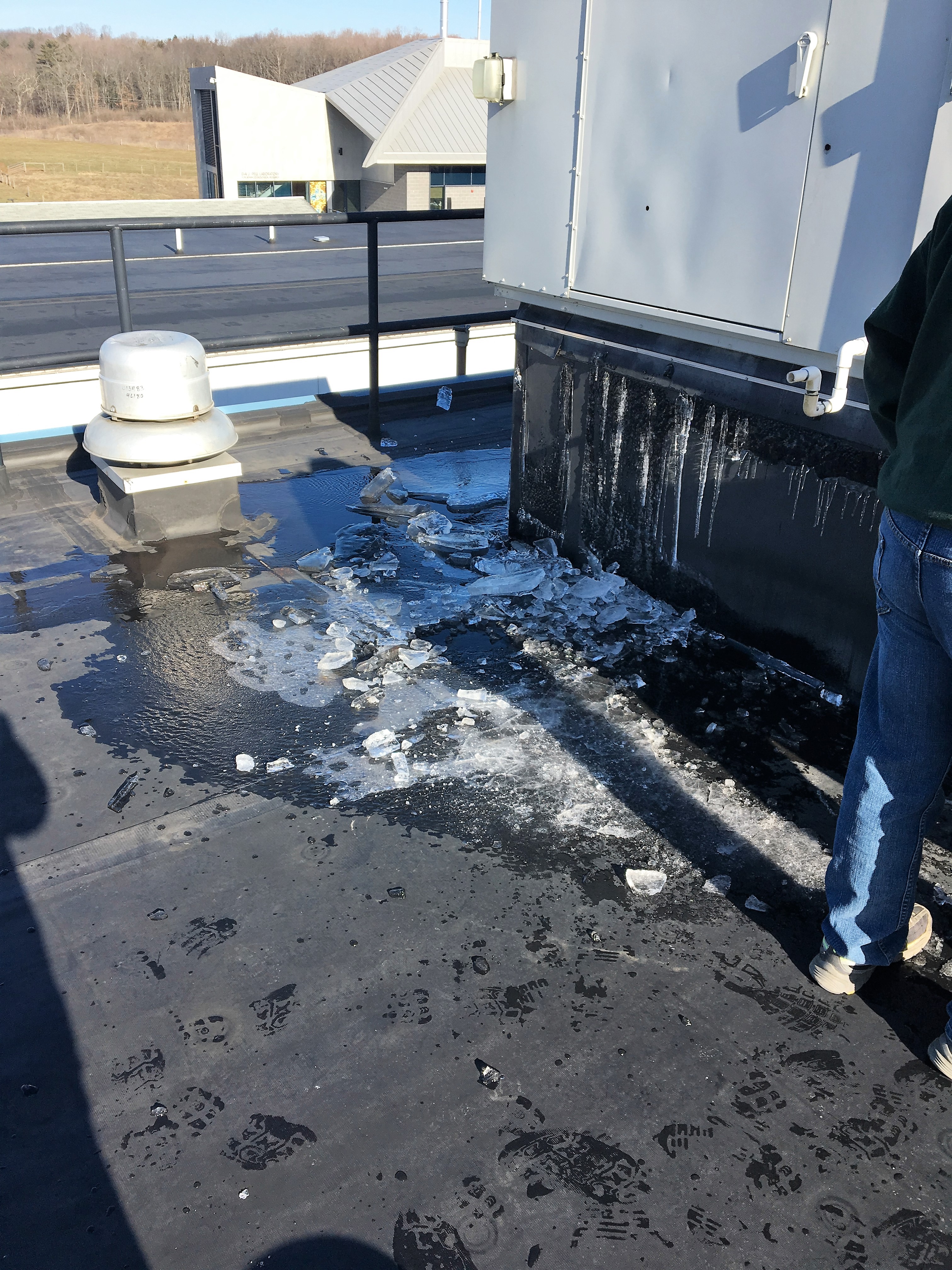
Regardless if you have steam coils or steam distributing (non-freeze) coil, you can freeze ANY coil.  When freezes happen, everyone immediately looks to the steam coil as the cause.  When in fact, there are numerous reasons that must be looked at well before the coil.

Freezes generally happen in older systems, however if your new system is not maintained properly or correctly installed, your steam coil can and will freeze.  For instance, you’d be surprised at how many times dampers are left open, controls fail, freezestats don’t work, etc.Steam Coils

In a Standard Steam or Steam Distributing Coil, a freeze-up can occur when condensate freezes within the tubes of the steam coil.  The two most common reasons for freezing steam coils are the steam trap and the vacuum breaker.  The function of steam trap is to remove the condensate as soon as it forms.  Condensate usually collects in the lowest part of the coil.  If your steam trap isn’t installed properly, that condensate will lay in the coil and it will inevitably freeze as soon as it sees outside air.  The vacuum breaker also helps clear the condensate, minimizes water hammers, and helps with uneven temperatures. This must be installed on the control valve and always above the steam trap.

Unfortunately, there are no ways to determine exactly where your steam coil will freeze.  And a common misnomer is that the condensate turns to ice and the expansion is what causes the tubes of the coil to pop.  In reality, it’s the pressure that builds up between freeze points.

Here’s couple tips in your coil design that can help prevent your standard steam and steam distributing coils from freezing:

  • Standard steam coils should NEVER see any outside air below 40 degrees.  If it does, steam distributing is the only way to go!
  • 5/8” OD Steam distributing coils over 72” long are recommended to have a dual supply
  • 1” OD Steam distributing coils over 120” long are recommended to have a dual supply
  • Make sure your steam coil is pitched if possible.  This slopes the condensate to the return connection making it easier to remove the condensate

Give Capital Coil & Air a try on your next project. Our engineering, pricing and service is the best in the industry!

RELATED POSTS

Heating Season Will Soon Be Upon Us

Commercial Steam Coils; Lengths & Controls

Types of Steam Coils


Top 10 Fan Coil FAQ’s

1. A fan coil is among the easiest units to understand in the HVAC industry.  Basically, there is a small forward curved fan, a coil, and sometimes a filter.  They are all direct drive units. Click HERE to see Capital Coil’s full Fan Coil Product Lineup.

2.  Fan coils run from 200 CFM to 2200 CFM, which is 0.5 ton through 5.5 tons.  Anything larger than these sizes requires a belt drive unit…which is really a full fledged air handler.

3.  The thing that differentiates fan coil units is where and how they are going to be installed.  Is the unit going to be hidden above the ceiling or maybe in a closet?  Or is it going to be exposed so that everyone can see it?  Will it be ducted or will it just pull air from the space where it’s located?  These are things that determine the configuration of the unit and which style of unit to choose.  But, every unit has 3 things in common:  fan, coil, and sometimes a filter.

Fan Coil 4.  Some units have (2) coils.  One for heating and one for cooling.  Obviously, there is a separate supply and return connection for each coil and these units are known as 4 pipe fan coils.  Many units only use the same coil for both heating and cooling and these units are 2 pipe fan coils.

5.  Units are either horizontal or vertical depending on the orientation and flow of the air.  A typical fan coil in a hotel room is a vertical unit with a mixture of air coming from outside and the air recirculating in the room.  The air enters at the bottom of the unit and is drawn upward through the fan.  This makes the unit a vertical style.  Many units are horizontal with the air entering at the back of the unit and traveling horizontally through the unit.

6.  Almost all fan coils are 3 speed or infinite speed settings based on the controls.  The high speed gives you more BTU’s, but more noise too.  Because the unit is direct drive, when you dial down the speed, you also dial down the performance.

7.  Coils in the units tend to be 3 or 4 row deep coils.  3 row is typically used the most, but if you need the extra performance, 4 row is the way to go.  Performance is always governed by the cooling aspect.

8.  Fan coils sometimes have short runs of duct work and there is static pressure on the unit.  Static pressure reduces the amount of CFM and BTU’s that the fan coil can give you.  This is true of both horizontal and vertical units.  Most performances listed on charts that you will see are static free performances.

9.  The control systems for fan coils are often more complicated and more expensive than the units themselves.  There are balancing valves, isolation valves, unions, y-strainers, p/t plugs, air vents, ball valves, thermostats, condensate float switches, and disconnects.  Capital Coil & Air can do this at the plant, but it is much cheaper and easier to do it at the installation. 

10.  Just describe your installation requirements to a sales engineer at Capital Coil & Air and they will guide you to the right design and configuration of the unit for you.  It requires only a phone call or e-mail! We look forward to working with you!


RELATED POSTS

Top 10 Chilled Water Coil Facts

Light-Duty Commercial Belt Drive Air Handlers

Top 10 Questions You SHOULD Be Asking Your Coil Supplier


Case Study – Replacement DX Coils at local Mushroom Farms

Replacement DX Coils: To those not aware, Kennett Square, PA is the mushroom growing capital OF THE WORLD! Kennett Square is also located quite close to Capital Coil’s sales office in West Chester, PA, and we get multiple requests per month to personally come out and measure DX coils that need to be replaced at these farms.

Mushrooms need a well-ventilated growing environment, and poor ventilation can lead to higher levels of CO2. Higher CO2 levels negatively affect mushroom quality and growth. Ensuring proper air circulation is essential for maintaining healthy crops. Mushrooms also thrive in high-humidity environments, but excessive moisture can also lead to mold or bacterial growth, which can damage the entire crop. Proper humidity control is crucial to maintaining the right balance and preventing costly losses. To tackle these problems, growers need reliable climate control systems, and that’s where Capital Coil steps in.

Mushroom cultivation, while lucrative, is not without its challenges. Running climate control systems for mushroom farming can be expensive, especially when using inefficient equipment. High energy costs can eat into profits, particularly for smaller, family-owned operations. One of the biggest challenges for mushroom farmers is making sure that the coils are working at peak efficiency because the conditions in and around those farms will corrode the aluminum fins at a faster pace than most other environments. As mentioned above, there are very specific conditions that need to be maintained for a successful crop, so the coils in the condensing systems that are needed to sustain those conditions have to be working at all times. 

One farm had been trying to repair numerous coils through different “band-aid” methods. None of these attempts worked, and the farm’s energy costs had skyrocketed when trying to get the same capacity from a failing coil.  One of the neighboring farms that had used us for numerous DX coil replacements recommended that they call Capital Coil to come out and assess the failing coils.DX Coils

After looking at a few of the units, most of the coils’ finned area had been eaten away by corrosive elements in the air. The OEM had not recommended any protection for the coils, which was why they failed far sooner than they should have. The new coils were to be installed in the original units, so the measurements needed to be exact. I also explained to them that any new coil(s) needed to either have more durable materials, such as stainless-steel casing and/or copper fins, or a protective coating for the whole coil. If not, these same issues would continue to occur.

The farm decided to order (1) DX coil with an epoxy coating as a “test” before ordering the rest. The new DX coil arrived a few weeks later and was a perfect match for the original unit. A year later it was still running at max capacity with zero damage to the finned area because of the coating.

Due to the speed that we were able to come out to the site, correctly assess the reasons for the coil failures, and make recommendations on increasing the coil’s longevity, they decided to order the remaining batch of DX coils from Capital Coil & Air. They also recommended us to many of the other farms in the area, so Capital Coil is now the main HVAC coil replacement company for many of the largest mushroom farms in the United States.

RELATED POSTS

OEM Replacement Coils: Repair or Replace

Why are HVAC Coils Copper Tube and Aluminum Fin

Top 10 Tips For Measuring HVAC Coils