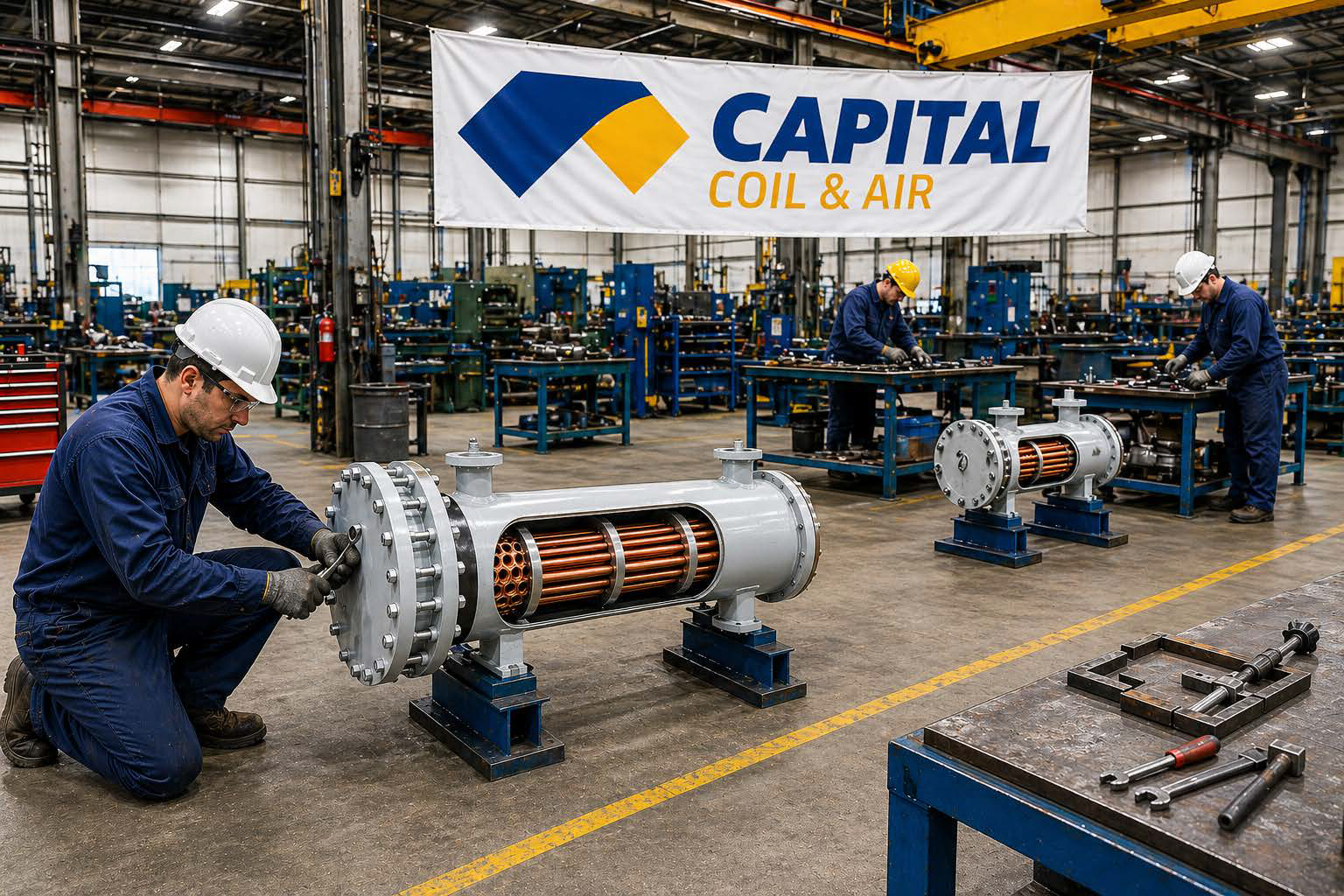
Need A Replacement For A Bell & Gossett Heat Exchanger

Bell & Gossett tube bundle or heat exchanger fail on you? Capital Coil offers direct replacements for most B&G Models, and we have quick build options to get you up and running fast.  Just send us the model number and a picture of the nameplate if you can and we’ll get you a quote asap.Shell & Tube Factory

Useful Information when determining your model:

  • Steam to Liquid or Liquid to Liquid
  • 2- Pass, 4-Pass or 6-Pass
  • Single tube or double tube
  • High Pressure or low pressure


RELATED POSTS

Top 10 Hints for Replacing Tube Bundles in U-Tube Exchangers

Replacing a Shell and Tube Heat Exchanger? And Have the Model Number?

Need A Replacement Heat Exchanger/Tube Bundle?


Why Are HVAC Coils Made with Copper Tubes and Aluminum Fins?

HVAC Coils

It’s no coincidence that HVAC coils predominantly use copper tubes and aluminum fins. Copper is known to have exceptional heat transfer properties, while aluminum, although effective, does not match copper’s performance. When it comes to HVAC coils, the primary goal is either cooling or heating, which means heat transfer is a top priority. Right behind that? Cost. While copper is ideal for tubes due to its efficiency, using it for fins would be economically feasible only under specific circumstances. Consequently, the majority of HVAC coils are designed with copper tubes and aluminum fins, which provide an optimal balance of effective heat transfer and cost efficiency.

Fins play a crucial role in heat transfer, accounting for approximately 65% to 70% of the total heat exchange in any coil. The tubes contribute about 30% to 35%. To achieve optimal performance, it is essential to have a strong fin-tube bond. In HVAC terminology, fins are referred to as the “secondary surface,” while tubes are the “primary surface.” Interestingly, the secondary surface—aided by the expansive fin design—carries out twice the amount of heat transfer compared to the primary surface.

In the manufacturing process, the tubes are expanded into the fins, making the fins the secondary element. Given the fin density—typically at 8 to 10 fins per inch—here is significantly more surface area from the fins than from the tubes. This further highlights the importance of a robust fin-tube bond, as it is essential for the fins to perform effectively.

Understanding the materials used in HVAC coils is critical, and the reason copper and aluminum are the materials of choice for most coils is clear. Alternative tube materials such as aluminum, 304/316 stainless steel, and 90/10 cupro-nickel can be used, but none match the efficiency and cost effectiveness of the copper-aluminum combination.

At Capital Coil & Air, we are dedicated to assisting you with all your coil selection needs and look forward to collaborating on your next project.

RELATED POSTS

Why Is Fin Design On HVAC Coils Important?

Top 10 Tips to Measuring Coils

Did You Know? Facts about Commercial HVAC Coils


Replacing Carrier Chilled Water Coils

For HVAC professionals, replacing Carrier chilled water coils is a task that demands precision. One miscalculation in dimensions, connection types, or circuit configurations can turn a straightforward replacement into a significant challenge, leading to delays and complications like compromised airflow or customer callbacks.

Why Precision Is Critical

Carrier chilled water coils are engineered with extremely precise specifications. Even the slightest deviation can result in issues such as:

  • Airflow Restrictions: A poor fit can obstruct air movement, affecting system efficiency.
  • Inefficient Heat Transfer: Suboptimal coils may lead to inadequate cooling performance and increased energy costs.
  • Connection Misalignment: Mismatched connections complicate the installation process and can lead to leaks or failures.
  • Extended Installation Times: Inaccuracies often necessitate additional rework, wasting valuable time on the job site.

It’s crucial to explain the importance of attention to detail to your clients. A so-called “replacement” coil that doesn’t meet specifications can inadvertently introduce new problems rather than solving the existing ones.

The Capital Coil Advantage

In the world of HVAC, many coil manufacturers overlook the significance of these specifications, opting for oversimplified solutions that can create headaches later on.

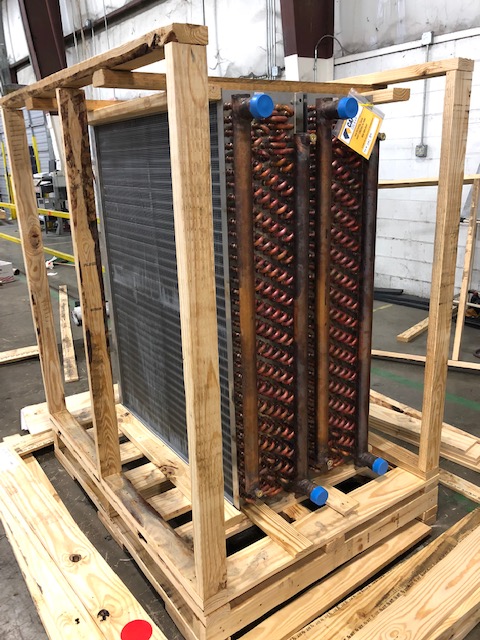
Here’s where Capital Coil steps in. Whether you have:chilled water coil
  • A clear model tag
  • A partial number
  • Or even just a worn-out coil

We have the expertise to provide a reliable solution. Our team has extensive experience manufacturing the coil types you depend on daily, ensuring you receive high-quality products.

Cross-Referencing Capabilities

In many cases, we can cross-reference Carrier coil models accurately, thanks to our comprehensive manufacturing history. If direct cross-referencing isn’t feasible, we can also work from the drawings you provide, creating a custom solution that meets your precise requirements.

Take-aways 

Replacing a Carrier chilled water coil doesn’t have to be a gamble. By collaborating with Capital Coil, you gain a reliable partner who understands the critical elements of the job: ensuring a perfect fit, optimizing performance, and getting the installation right the first time. 

For additional information or to discuss your specific coil replacement needs, feel free to reach out to the Capital Coil team. Let us help you streamline your projects and enhance your HVAC services!

RELATED POSTS

Looking For A Trane Replacement Coil

Top 10 Chilled Water Coil Facts

Why Cooling Coils Need to Be Replaced