OEM Replacement Coils: Repair or Replace

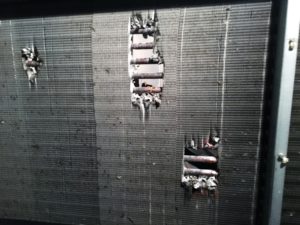
When considering OEM replacement coils, there are multiple reasons why coils can fail prematurely. Sometimes, OEM Coils simply freeze and can never be repaired. Other times, the coil was selected incorrectly, which in turn, made the coil significantly underperform. Many times, there is substantial corrosion or something else in the system that causes the coil to fail. However, most coils, when selected correctly, and in systems that are properly maintained, can last anywhere from 10-30 years!  10-30 years is also a pretty wide range, and there are many variables in how long you can expect a coil to perform. Factors, such as ongoing maintenance, air quality, and water/steam quality all have an effect on a coil’s lifespan.
OEM Replacement Coils

Reasons Why Coils Fail Of Old Age

  • While the coil’s tubes are considered the primary surface, 70% of all coil performance is performed by the finned area on a coil, which is known as the secondary surface. The fin/tube bond is easily the most important manufacturing feature in any coil. Without the bond between the tubes and fins, the coil could never properly function. Like all things however, over time the fin/tube bond becomes less efficient with constant expansion and contraction. While the construction of the coil, as well as the fin collars, does not allow the fins on the coil to move, that fin/tube bond naturally weakens a coil’s life over time after installation. Because of this, it is not a stretch to say that a coil is easily 30% less efficient after (20) years.
  • Cleaning coils often pushes dirt to the center of the coil, and this occurs even more so on wet cooling coils. Just remember that coils can become great air filters if not properly maintained. The BTU output of any coil is in direct proportion to the amount of air going through the coil. If you decrease the CFM by 20%, you are also decrease the BTU’s by 20%!
  • Cleaning agents often corrode aluminum fins. Since every square inch of fin surface matters in performance, corrosion of the fin surface is always detrimental to the coil’s performance.
  • Many times, there are coil leaks simply because of old age. No coils are immune to erosion. You might find the brazing in the tubes, as well as the brazing in the header/tube connections failing over time. Steam can be both erosive and corrosive under higher pressures. Water travels through the coil at 2 – 5 ft/second, so erosion is an enormous part of coil failure, regardless of how well-maintained. Erosion is always there, whether you realize it or not.
  • Water/steam treatment and the corrosive effects of bad steam/water can all be causes of coil failure…which then necessitates the need for a reliable manufacturer for OEM replacement coils.

So What Is The Solution?

Some coils can last 5 years, and some coils can last 30 years. As you have read, there are numerous factors that contribute to a coil’s life. In the end, there will most likely have been multiple attempts to repair that coil to make it last as long as possible. The depressing news is that most of these “Band-Aid” attempts do not work well. The most likely outcome is that you are buying a new coil anyway, so why waste the time and money on a temporary solution?

Coil failure is a “pressure event”, which is a fancy way of saying that a coil is leaking. We’ve listed some of the most common repair methods that you are likely to come across:

  • Drop leaking tubes from the circuit: Keep in mind however that every dropped tube reduces the coil’s performance by triple the surface area of the tube that is dropped. Again, while ok in the short-term, this is simply another “Band-Aid” fix. Over time, your energy costs will rise exponentially, and you will probably end up buying a new coil anyway.
  • Braze over the existing braze: As mentioned above, erosion has caused the original braze to fail, so all that you are really doing is pushing the pressure to another braze, which will then begin to fail as well.
  • High Pressure Cleaning: This method bends the fins, further restricts the airflow, and pushes dirt more to the center of the coil, which can never be adequately cleaned.

The real reason why coils need to be replaced rather than repaired is due to energy costs. If your coil is not operating near desired levels, you’ll need to increase the energy to make it work at its peak performance. Energy increases might be slight at first, but they are guaranteed to continue to rise over time. For example:

  • Somebody adjusts the fan drive for higher speeds, higher CFM’s and higher BTU’s.
  • Someone adjusts the boiler; the water and steam temperatures are higher.
  • Someone adjusts the chiller (1) degree higher for colder water to the chilled water coil.

Whichever method is used, performance begins to suffer and adjustments to the system occur. These adjustments cost energy efficiency and ultimately, money!

If you have ever experienced repairing a coil, then you know it is labor intensive and typically will not work as a permanent solution. With very few exceptions, repairs should be seen as nothing more than temporary until you’re able to replace that coil!

Capital Coil & Air has seen every “repair” method used, as well its inevitable outcome, so instead of putting yourself through that, call Capital Coil and allow us to be your coil replacement experts.

RELATED POSTS

Is Your Quick-ship Shut Down When Needed Most??

Four Things That You Need When Buying Replacement Coils
Replacement HVAC Coils: 10 Common Ordering Mistakes

Top 5 Reasons HVAC Coils Prematurely Fail


Now Offering R-454B Refrigerant for All DX Coils

In keeping with most of the OEM’s in 2025, Capital Coil is helping everyone transition from R-410A over to R-454B refrigerant in their DX Coils. Whether you are designing a new system, or retrofitting an existing one with a condensing system, Capital Coil can help in making the switch in refrigerants.DX Coils

If you are not yet aware, the EPA is working hand in hand with many of the major OEM’s to help reduce commercial HVAC’s carbon footprint. One of the major ways in which HVAC manufacturers are helping and complying with the new industry standards is the gradual change in refrigerants from R-410A to R-454B. Beginning in January, 2025, no new system is allowed to be built or imported using the older refrigerants. Without going into a deep dive on the differences, R-454B offers a lower GWP (global warming potential) alternative to R-410A. Hence the mandate to change to that refrigerant type. 

However, Capital Coil will still offer R-22 and R-410A for DX Coils in older systems that might not be compatible with R-454B. In other words, Capital Coil has been, and will remain, the most reliable source for all commercial and OEM replacement coils. Our #1 job is to make to your job easier, so please reach out. You will be glad you did.

RELATED POSTS

What Does “Splitting” A DX (Evaporator) Coil Mean?

Condenser Coils Failing? Here’s probably why….

OEM Replacement Coils: Repair or Replace


Cooling Coils & Moisture Carryover

Moisture carryover is present on cooling coils where dehumidification happens.  Many people do not think it’s a problem…until you have moisture running down ductwork or spewing all over the inside of an air handler. If you’ve ever experienced that then you probably know all of these rules regarding moisture carryover.

  • Entering air temperatures of 80/67 of return air in the Northeast carry far less moisture than an outside 95/78 entering air temperature in Florida. Outside air always has more moisture. Cooling Coils

    -Your location plays a part as well. The drain pans will absolutely have be sized differently. Florida’s will be much larger in size.

  • Fin design is irrelevant when it comes to moisture carryover. Whether you have copper corrugated fins, or aluminum flat fins, plate fins or even the old fashioned spiral fins, none of it has any effect on moisture carryover.
  • Lastly, be careful when installing a new chilled water or DX (Evaporator) Coils in a system. Many end users like to increase the airflow on older coils because those old coils can act like filters, the fins are covered in dirt/dust and you’re not getting the same airflow through the coil. This dirt on the coil also semi-prevents moisture carryover. When that brand new chilled water coil is installed, the airflow might be higher than that of 550 ft/minute, which of course will cause moisture carryover problems. 

Please give us a call with any questions about your coil, your system or its design. Capital Coil is here to help you avoid situations like the one described in this post, and we would love for the chance to work with you!


RELATED POSTS

10 Things You Need to Know About Chilled Water Coils

Top 10 Chilled Water Coil Facts

Chilled Water Coil Circuiting Made Easy


Case Study: We Need These Coils on a (5) Day Quick-ship

In late June, Capital Coil received a call from a Trane office in Ohio regarding quick-ship availability. One of Trane’s top customers had an urgent need for (12) large chilled water coils with stainless steel casing. The problem/hurdle that they were encountering was that they needed all (12) coils to be built and ship out of the factory in (5) business days. Completion of the whole project was 100% contingent on them receiving the coils in their specified time-frame. An additional complication was the fact that July 4th was the following week, and they needed to have the coils ship prior to the holiday.

Trane shopped the project around to different manufacturers, but not one could guarantee to ship in (5) days. Some manufacturers waffled and claimed that they could have them built in (6) or (7) days, but not one could guarantee to ship in (5) days. A sales rep in that same Trane office, who had worked with Capital Coil previously, suggested that his co-worker reach out to us to see what we could do. After speaking with Trane’s project manager, we immediately contacted our head of production to make sure that we had the capacity to complete all (12) coils in the required (5) days. She assured us that we had the materials and manpower on-hand to get them all built and ship on time. We agreed to accept the project and began work on the coils immediately.

Due to the size of the project, as well as it’s time-sensitivity, we had multiple calls daily with our factory to ensure that everything was proceeding on schedule. We then gave Trane daily status updates, so they were constantly informed of everything from the brazing of the coils to entering the final testing phase. Chilled Water Coil

As promised, all (12) coils were built correctly and shipped out in the required (5) days. Our logistics team was then in constant communication with the freight company to make sure that the delivery was on schedule. And just like during the production phase, we passed daily tracking updates along to Trane, so they knew where their coils were at all times and when they could expect delivery. All (12) chilled water coils arrived on July 3rd with zero freight damage, and the project was completed on time!

A company as large and influential as Trane can have their coils built by anyone, but Capital Coil was the only manufacturer that could guarantee to have their coils built and shipped by a required date. Additionally, in working so closely with Trane throughout the whole process, they were kept up-to-date in real time from the start of production to final delivery.

Capital Coil offers a level of service that you won’t get with other manufacturers. When we guarantee to ship by a certain date, we stand by that guarantee, or you do not pay!


Trane’s project manager’s comments to Capital Coil upon completion/delivery:

“This will help us get a jump on this project prior to the big event taking place next week! 

I will make sure to share your information with others across our great lakes region about our experience with your company, so that they know we have THIS option to go to for our coil needs. THANK YOU ALL!!”


Why Are Fin Designs On HVAC Replacement Coils Important?

Replacement HVAC Coils

At first glance, fin designs on HVAC replacement coils seem about as exciting as watching grass grow. “Why would I ever care about fin designs on any coil” was probably your initial response to our question. Nevertheless, we would not dedicate a newsletter to this subject if fins were not important.

One of the primary reasons fins are so important is that you want to keep your coil as clean and maintained as possible. In order to properly maintain your coil, you need to have an understanding as to how HVAC replacement coils are constructed. While fins do not look like much, they are MUCH more complicated than what you can observe at the entering or leaving airside of the coil.

To begin, fins are responsible for a surprising 65% – 70% of the heat transfer on any coil, while tubes are responsible for the remaining 30% – 35%. Additionally, in order for your coil to work at optimum performance, you need to have a terrific fin/tube bond, (which we will discuss below).

  1. Fins are known as secondary surface, while tubes are referred to as primary surface. While this may seem counter-intuitive, the secondary surface is responsible for twice the amount of heat transfer as the primary surface.
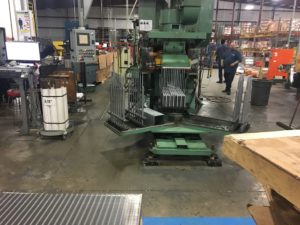
  2. There are special dies (see picture) that stamp out aluminum or copper fins with the correct thickness, height, and depth to make the coil the correct size. For example, a coil might be 36” (height) x 96” (length) x (8) rows deep x 8 fins/inch.
    1. Fin Height: 36”
    2. Fin Depth: 12”, (8) rows deep
    3. # of fins in the coil: 768 (8 fins x 96”)
  3. Each fin has 192 holes stamped in the fin for 5/8” OD tubes (8 Rows x 24 Tubes), and each fin is identical.
  4. Each hole has extruded metal, which is more commonly referred to as the fin collar. The collars are sized to self-space the fins and allow for later expansion of the tube into the fin collar. This practice is also known as “bonding” and is essential to having your coil run efficiently/correctly.
  5. Each fin is rippled at the entering and leaving edge of the fin to help create air turbulence.
  6. Each fin is corrugated in the direction of airflow to allow for greater air turbulence. This is important to remember because turbulence creates heat transfer.

So again, what is the point of understanding the importance of fins in HVAC coils? While coils can be built with flat fins for various reasons, the vast majority of coils are built with enhanced fins. Enhanced fins help to ensure that the airflow is not running straight through the coil.

Regardless of fin type, keep in mind that HVAC coils can and will act as great “filters”. The tubes are staggered and not in-line; while the fins are designed to help break up the airflow and not facilitate an easy, straight-through air path. Dirt and/or other particles in the air get caught easily, which again, is why coils can act as great filters. Additionally, coils with more rows will usually get dirtier than coils with less rows. Lastly, chilled water or DX coils are typically wet coils, which results in them catching virtually everything in the air.

The amount of BTU’s through any coil is in direct proportion to the amount of air through the coil. For example, if you are only getting 90% of the design air through the coil, then you are only getting 90% of the BTU’s.

Coils require good filtration and periodic maintenance. If not done correctly, you’ll pay the price of higher energy costs on an inefficient coil.

By now, you have hopefully come to the realization that HVAC coils are much more complicated than they appear, and that fins are an integral part of the coil as a whole. Again, while admittedly not the most exciting topic, understanding the role and importance of fins in HVAC coils cannot be overstated. Capital Coil & Air is here to help you with any and all coil selections, and we look forward to working with you on your next project.

RELATED POSTS

Repair or Replacement Coils?

Top 5 Reasons HVAC Coils Prematurely Fail

Are You Asking Your Coil Supplier These Questions?


Fan/Coil Units Without the Mysteries

Lots of companies in the HVAC business attempt to keep their products as complicated as possible in order to lend a certain “mystery” to the industry, which has never made sense to us at Capital Coil. We have all been in this information age for quite some time with more information/data available to more people than ever before. We feel that by removing some of the “secrecies” surrounding fan/coil units, our customers will be able to better understand the products as we do.

Most of our potential customers know Capital Coil strictly for our HVAC coils, which makes sense because the word “coil” is in our company’s name. But some people may not be aware that we do in fact offer multiple fan/coil models with various quick-ship options, or that fan/coils comprise a significant portion of Capital Coil’s overall business.

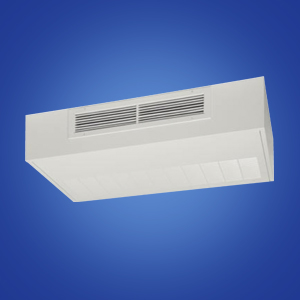
With that said – what are fan/coil units (FCU’s) exactly?fan/coil units

  • Fan/coils are easy to understand when you remove a lot of the complex terminology. Our definition of a FCU unit is one that is direct drive and not belt driven…easy enough to understand, right? There is a fan, a coil, and sometimes a filter. Capital Coil offers numerous model types, but the only thing that really differentiates the various models from each other is the casing on the outside of the unit. And the casing is typically based on how and where you want to install the unit.
  • The fan is directly mounted on the motor, and the maximum CFM that can be used in these units is typically 1,200 FT/min. However, Capital Coil does offer some units that can have a CFM as high as 3,000 FT/min, or (7.5) tons.
  • FCU’s can be divided into two groups based on airflow – Horizontal and Vertical. Think of fan/coils installed in a hotel or classroom. These are typically vertical units because the air goes from the bottom of the unit to the top discharge airflow.  Horizontal units have horizontal airflow with inlet and discharge both horizontal as well.
  • As mentioned, fan/coil casings are determined based on how and where you want to install the unit. But figuring that out involves asking some additional questions, such as is the unit hidden above the ceiling or is it exposed? Is the unit horizontal or vertical? Does the unit need a filter?
  • Like most any product, there are several “packages” that you can select, such as certain valves, that will make the unit more expensive and complex. But once you strip away the complex terminology and are able to understand the basic design and concept of FCU’s, they are pretty easy to work with.

Now you know that Capital Coil is very much in the fan/coil business, and when you are looking for something fast, Capital Coil should be your first call or email!

RELATED POSTS

Quick-Ship Fan/Coils & Light Duty Air Handlers

TOP 10 FAN COIL FAQ’S

Light-Duty Commercial Belt Drive Air Handler Units